Liu Ren, Ph.D.
Senior VP and Fellow of AI

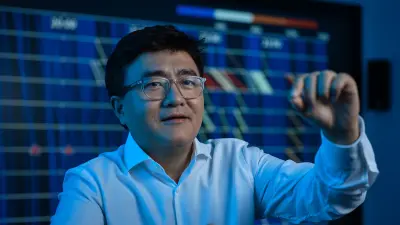
As the Senior Vice President and Fellow for AI at Bosch Research and Bosch Center for Artificial Intelligence (BCAI), Liu Ren bridges foundational research with real-world applications. Based at Bosch Research North America’s Silicon Valley location, he leads Bosch Research's largest global strategic project portfolio, which focuses on core AI (Artificial Intelligence) for Advanced Driver-Assistance Systems (ADAS). He also co-leads the cross-divisional automated driving team, uniting experts from Bosch Research and the ADAS Product Division worldwide to accelerate the AI transformation of next-generation products. In the meantime, he is also actively shaping future research in the field of robotics for Bosch.
In his role as the AI fellow for Bosch Research, he guides global teams to create innovations and solutions that solve key industrial challenges, from automated driving and smart manufacturing to consumer goods. The work has enabled Bosch to deliver transformative business impact and earn prestigious industry awards. He also remains committed to advancing the field, having contributed to over 70 top-tier AI publications, earned several best paper awards, and built an extensive portfolio of over 70 patents.
In a short interview, Liu Ren gives some insights into his research and work:
Please tell us what fascinates you most about research.
Our cutting-edge research outcomes are not only recognized at leading AI conferences, earning best paper awards, but are also deeply tangible. These unique selling points are crucial enablers, allowing our fascinating products to scale and succeed across our key business areas — advanced driver assistance systems (ADAS), manufacturing, and consumer goods — thereby creating immense business impact.
What makes research done at Bosch so special?
Bosch’s global footprint offers a unique advantage, particularly our Silicon Valley research unit. Situated at the heart of global AI and software innovation, our Silicon Valley researchers are uniquely positioned to engage the local ecosystem, identify and shape early trends, and collaborate with top-tier universities like Stanford and UC Berkeley to advance core research. This allows us to drive innovation by addressing emerging and undiscovered business needs, ultimately impacting the world and guiding Bosch's future.
Beyond leveraging the strength of our Silicon Valley location, this global footprint also enables seamless collaboration with Bosch researchers in other key locations, including Germany, China, and India. This diversity in perspectives and expertise is a significant accelerator for innovation.
Complementing this global setup is Bosch's diverse product portfolio. This breadth enables our researchers to develop customer-centric, market-driven, and sustainable AI solutions that achieve significant real-world impact, moving beyond purely scientific excellence. Furthermore, as a privately held company, Bosch is uniquely insulated from stock market fluctuations. This allows us to commit to long-term research that perfectly aligns with our strategic vision, rather than focusing solely on short-term gains.
What research topics are you currently working on at Bosch?
As the Senior Vice President and Fellow for AI at Bosch Research, my current research at Bosch is strategically focused on driving both foundational AI innovation and its impactful application across our core industrial domains.
A primary emphasis is on leading Bosch Research's largest global strategic project portfolio, dedicated to core AI for Advanced Driver-Assistance Systems (ADAS). This work is essential for accelerating the AI-driven transformation of next-generation automotive products. I also co-lead our cross-divisional automated driving team globally, in collaboration with the CTO from our ADAS product division, uniting experts worldwide to achieve this vision. Beyond ADAS, my role involves guiding global research teams to develop cutting-edge AI solutions for critical challenges in other Bosch industrial sectors, including smart manufacturing, car infotainment, and consumer appliances.
To achieve these goals, our research covers a range of advanced AI topics. This includes pioneering work in Generative AI (GenAI) and Large Language Models, as well as Vision-Language-Action (VLA) models, advancing Computer Vision for robust perception and world models, ensuring trustworthiness through Explainable AI (XAI), and exploring big data visual analytics. We also focus on developing intelligent Robotics. My overarching aim is to bridge the gap between groundbreaking research and commercial reality, ensuring these innovations deliver transformative business value for Bosch.
What are the biggest scientific challenges in your field of research?
The biggest scientific challenges in my field center on two key areas. First, we're focused on developing AI solutions, such as End-to-End (E2E) or Vision-Language-Action (VLA) models, for automated driving. These must be not only human-like in their capabilities but also rigorously trustworthy and reliable for safe release, which is always a significant challenge given their safety-critical nature. Second, scaling agentic AI solutions presents a substantial challenge especially in vertical domains like manufacturing and mobility, the need for extensive customization can lead to a fragmented solution landscape, creating a trade-off between tailored performance and broad applicability.
How do the results of your research become part of solutions “Invented for life”?
Our research directly contributes to 'Invented for life' by focusing on AI solutions that enhance safety, efficiency, and human well-being across critical domains. For instance, our AI and system innvoation for ADAS directly leads to safer vehicles, preventing accidents and protecting lives. In smart manufacturing, our AI innovations improve product quality and worker safety, while in consumer appliances, they create more intuitive and energy-efficient products that simplify daily life. Ultimately, we bridge cutting-edge AI research with real-world applications to deliver tangible, life-improving benefits that align perfectly with Bosch’s mission.
Curriculum vitae
Since 2006
CS Ph.D. graduate, vision-based performance interface, machine learning for human motion capture, analysis, and synthesis, Carnegie Mellon University (USA)
2001
CS Ph.D. intern, computer graphics, real-time rendering, and scientific visualization, Mitsubishi Electric Research Laboratories (USA)
1999
CS MSc. graduate, AI-assisted computer aided design, Zhejiang University (China)
Selected publications
Recent full list in www.liu-ren.com

L. Gou et al. (2020)
- L. Gou, L. Zou, N. Li, M. Hofmann, A. K. Shekar, A. Windt, L. Ren
- EEE Visualization (VAST) (2020)
- IEEE Transactions on Visualization and Computer Graphics 2021
- Best Paper Award
L. Ren (2020)
- Bosch Digitial Annual Book 2019
L. Ren (2019)
- Auto.AI USA 2019
- Opening Keynote
Y. Ming et al. (2019)
- Y. Ming, P. Xu, F. Cheng, H. Qu, L. Ren
- IEEE Visualization (VAST) (2019)
- IEEE Transactions on Visualization and Computer Graphics ( Volume: 26, Issue: 1, Jan. 2020)
Get in touch with me
Liu Ren, Ph.D.
Senior VP and Fellow of AI